Free template · Research
Hashtag research template
Hashtags help people find posts by topic, but only when they're relevant and used within each platform's rules. This template helps you research candidate tags, see how the posts that used them performed, and keep tested sets ready to reuse.
Download free · no sign-up
Preview
Research
Check each tag on the platform before you use it: recent posts, who uses it, whether it fits.
Results
Add up the posts that used each tag over a month or more. Averages are calculated.
Hashtag sets
Tested tags grouped into sets you can paste in one go. The number of tags is counted for you.
Platform rules
Hashtag rules from the limits HeyOrbit's composer enforces, taken from each platform's documentation.
What's inside
- A research sheet: tag, platform, type, relevance, what you saw and a keep, test or drop decision
- A results sheet that averages reach and engagement rate for the posts that used each tag
- Named hashtag sets per platform, with the number of tags counted
- Each platform's hashtag rules, from the limits HeyOrbit's composer enforces
The columns, explained
- Hashtag
- Written in CamelCase, so it's readable and screen readers say it properly.
- Platform
- Tags behave differently on each platform; research them separately.
- Type
- Branded, campaign, community, topic, location or event.
- Relevance (1–5)
- How well the tag describes your posts and your audience.
- What you saw
- Recent posts under the tag: are they your kind of content and audience?
- Checked on
- Tags change; note when you looked.
- Decision
- Keep, test or drop.
- Notes
- When to use it, or why not.
How to use this template
List candidate tags
Start with the words your audience uses: your topic, community names, places and events, plus your brand tag.
Check each one on the platform
Look at recent posts under the tag. Are they your kind of content and audience? Note what you saw and the date.
Track the results
For a month or more, add up the reach and engagements of the posts that used each tag; the sheet averages them.
Build sets
Keep the tags that fit and perform as named sets per platform, and drop the rest.
Tips
- Relevance first. A tag that describes the post and that your audience follows beats a bigger generic one.
- Per-tag results show correlation, not cause: a strong post lifts every tag it used. Compare tags across many posts before deciding.
- Write multi-word tags in CamelCase so they're readable and screen readers say them properly.
- Re-check tags every few months. Communities move, and some tags fill up with spam.
- Stay within the rules: up to 30 on Instagram, one topic tag on Threads, and never more than 60 on YouTube.
Do this automatically in HeyOrbit
Use your hashtag sets in HeyOrbit
- Save hashtag sets and add them to any post in one click.
- The composer warns before a post breaks a platform's hashtag rule.
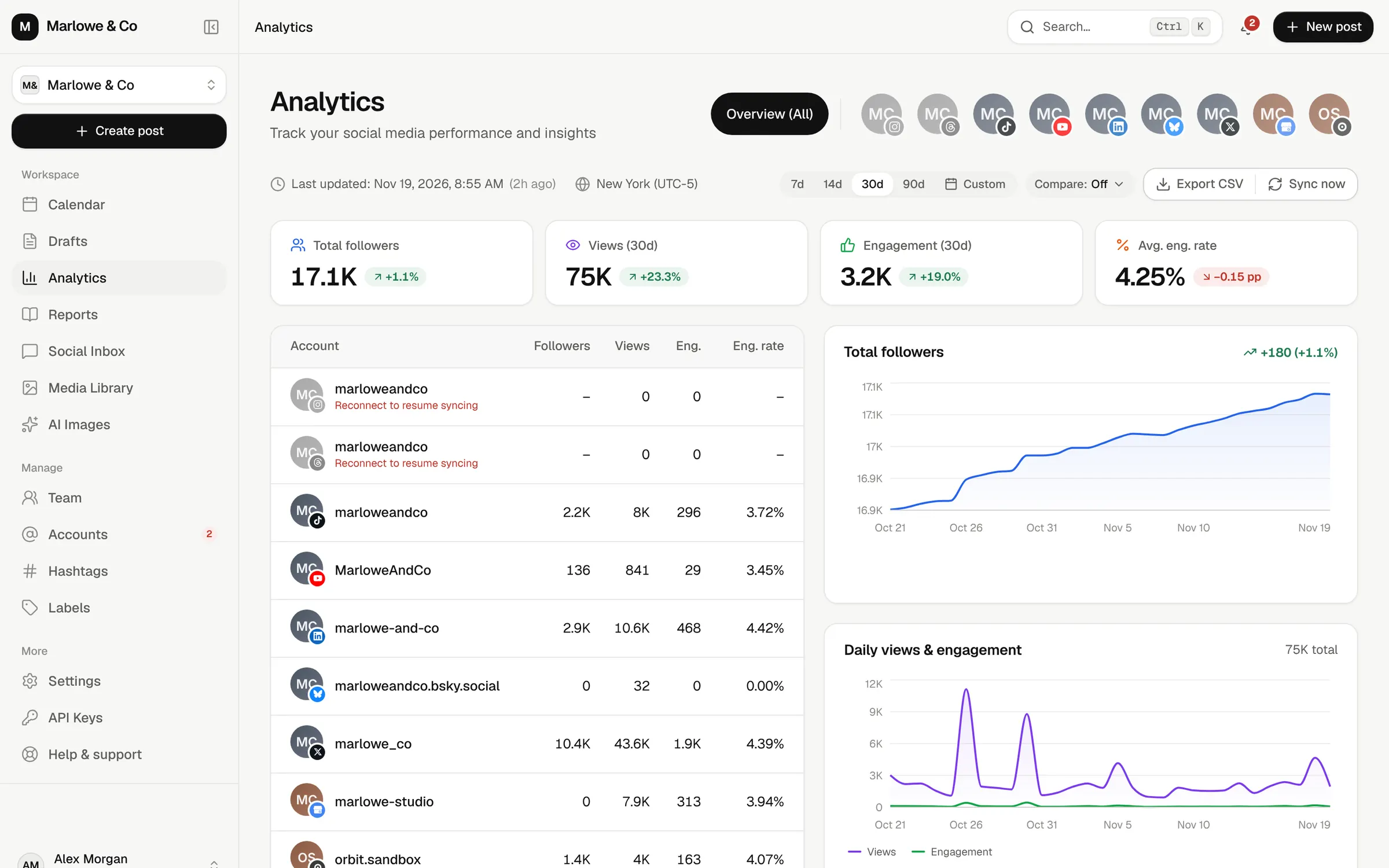
- The analytics explorer ranks the hashtags in your posts by average engagement rate.
- The free hashtag generator suggests tags sized for each platform.
Free to sign up. You pay $6 (₹499 in India) a month for each social account you connect, with unlimited team members. Book a call if you'd like a walkthrough.